

Why Your Body Clock Controls More Than Sleep
Your body clock influences far more than bedtime. With better timing of light, meals, focus blocks, and recovery, you can improve energy and consistency without extreme routines.
Your body clock affects much more than sleep. It influences focus, mood, appetite, stress response, and even how quickly you recover from mental effort. Many people try to solve low energy with more caffeine or more discipline, but timing is often the real lever.

Why Timing Beats Intensity
Most routines fail because they ignore biological timing. The same task can feel easy at one hour and painfully hard at another. Your circadian rhythm regulates alertness windows and recovery phases across the day. When your schedule aligns with those windows, execution becomes smoother with less effort.
This is why two people with the same motivation can have very different results: one works with biological timing, the other fights it.
What Your Circadian Rhythm Actually Controls
Your internal clock helps coordinate cortisol, melatonin, body temperature, and attention cycles. In practice, this means your best cognitive performance usually appears in predictable blocks, not randomly. It also means late-night stimulation can damage the next day long before you feel “sleepy.”
A practical move is to map your day into three zones: deep-focus hours, admin hours, and recovery hours. Once this structure is clear, decision fatigue drops and consistency improves.
A Real-World Framework You Can Use Today
Start with four simple rules:
- Morning light exposure within the first hour of waking.
- Biggest thinking task in your highest-energy block.
- Caffeine cutoff 8–10 hours before sleep.
- Predictable wind-down routine before bed.
These rules are small, but they create strong downstream effects on focus and mood over the week. If you liked Productivity: Why Working Less Produces More, the same principle applies here: structure reduces friction.
Real-Life Example
A founder struggling with daily brain fog shifted his schedule instead of adding more tools. He moved strategic work to mid-morning, pushed meetings to the afternoon, and added a consistent evening shutdown routine. Within two weeks, output quality improved and late-day stress dropped.
He didn’t become “more disciplined.” He became better aligned with his biological timing.
Scientific Explanation
Research on chronobiology shows that attention and reaction speed vary with circadian phase. Sleep timing, light exposure, and meal timing all act as cues that either stabilize or disrupt the rhythm. When these cues are inconsistent, the brain spends more energy compensating, and performance feels noisy.
From an SEO content standpoint, this topic works because it combines clear science with practical implementation. Readers stay longer when they get both explanation and action steps, not theory alone.
FAQ
What is the fastest change to improve circadian rhythm?
Morning sunlight and consistent wake time are the highest-leverage starting points for most people.
How long does it take to feel improvement?
Many people notice better daytime energy within 5–10 days when timing cues stay consistent.
Can this help teams, not just individuals?
Yes. Teams that protect deep-work windows and reduce late-night overload usually get better decisions and fewer avoidable mistakes.
Final Thoughts
You don’t need extreme routines to feel better and work smarter. You need better timing. Aligning your day with your body clock turns productivity from a constant fight into a repeatable system. Over time, those timing gains compound into better focus, calmer execution, and stronger long-term results.
🎯 Want More Mind-Blowing Facts?
Join 50,000+ curious minds getting weekly discoveries in their inbox
No spam. Unsubscribe anytime. 100% free.
Questions? info@curiospark.org
How did this article make you feel?
🔗 Related Facts You'll Love
Debunking Historical Myths: Truths We Get Wrong
Some historical stories feel so familiar that we never question them. But what if the most repeated versions are not the most accurate?
10 Mind-Bending Scientific Facts That Challenge Everything You Think You Know
Science has a habit of revealing truths that seem impossible - facts so counterintuitive that they fundamentally challenge our understanding of reality. These aren't science fiction or theoretical spe...
Why Static Shocks Are Worse in Winter
Dry air holds less moisture, so static charge builds up more easily and discharges with a shock.
Honey Never Spoils—Archaeologists Found 3,000-Year-Old Honey
Ancient Egyptian tombs contained pots of honey that were still perfectly edible after thousands of years.
Did this blow your mind? Share it with someone who needs to know!
Our team of researchers, writers, and fact-checkers work together to bring you the most fascinating and accurate facts from science, psychology, and human behavior. We're passionate about making complex topics accessible and engaging for curious minds everywhere.
Frequently Asked Questions
The key idea is to reduce friction and improve consistency using structured choices and better defaults.
Related Articles
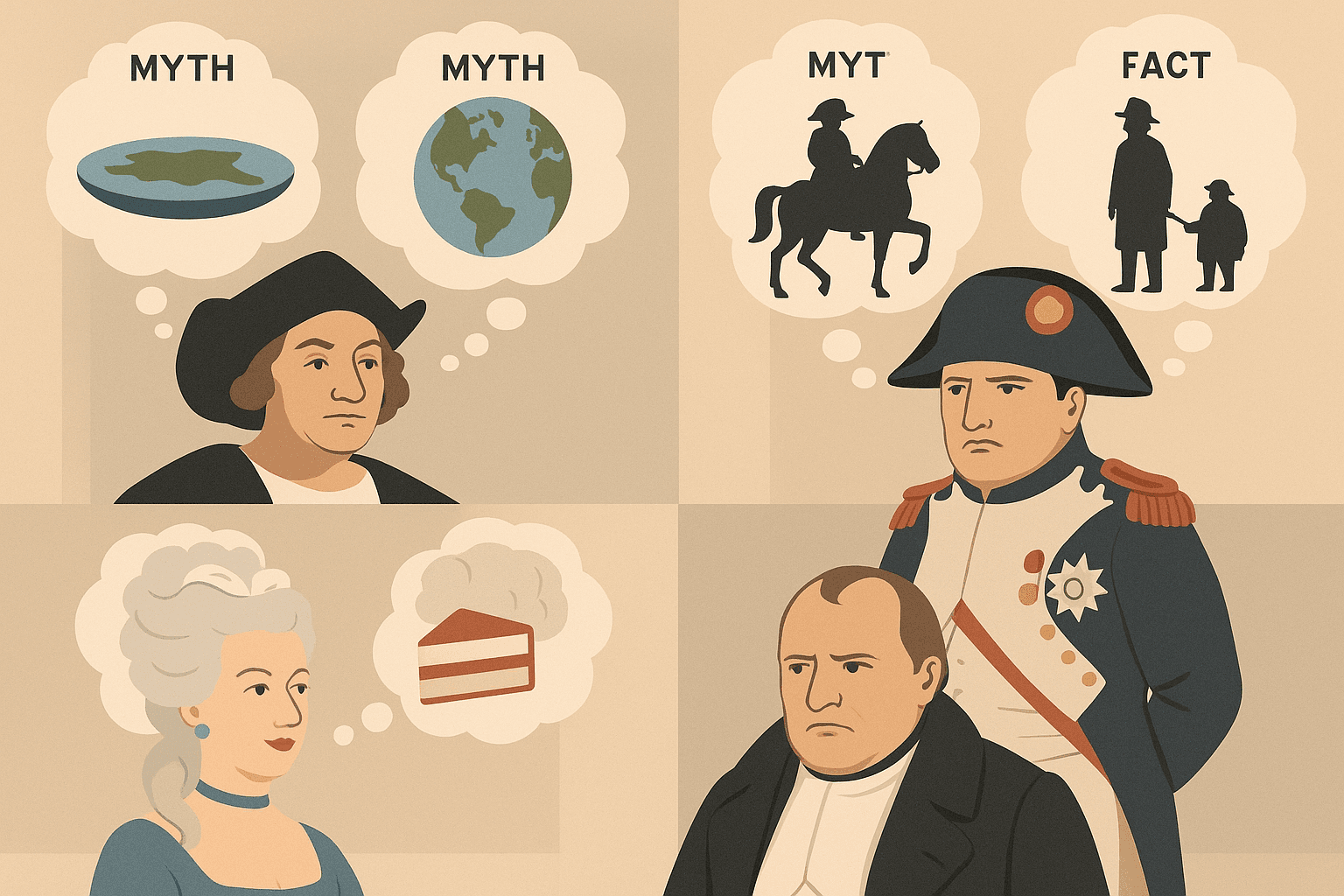
Debunking Historical Myths: Truths We Get Wrong
Some historical stories feel so familiar that we never question them. But what if the most repeated versions are not the most accurate?

10 Mind-Bending Scientific Facts That Challenge Everything You Think You Know
Science has a habit of revealing truths that seem impossible - facts so counterintuitive that they fundamentally challenge our understanding of reality. These aren't science fiction or theoretical spe...

Why Static Shocks Are Worse in Winter
Dry air holds less moisture, so static charge builds up more easily and discharges with a shock.
Read Next

The Science-Backed Secrets to Living 10+ Years Longer
Here's the surprising truth that decades of research have revealed: genetics account for only about 20-30% of how long you live. The rest? It comes down to your daily habits, social connections, and l...

The Hidden Cost of Small Choices: Decision Fatigue
Have you ever found yourself exhausted after a day filled with trivial decisions? Maybe you’ve spent thirty minutes trying to choose which series to binge-watch, or perhaps you’ve stood in front of...

5 Surprising Signs You're More Intelligent Than You Think
Have you ever doubted your own intelligence? You're not alone. Intelligence isn't just about IQ scores or academic achievements. Recent research in cognitive psychology reveals that many everyday beha...
Enjoyed this article?
Get more amazing facts delivered to your inbox