

10 Mind-Bending Scientific Facts That Challenge Everything You Think You Know
Science has a habit of revealing truths that seem impossible - facts so counterintuitive that they fundamentally challenge our understanding of reality. These aren't science fiction or theoretical spe...
Reality Is Stranger Than Fiction
Science has a habit of revealing truths that seem impossible - facts so counterintuitive that they fundamentally challenge our understanding of reality. These aren't science fiction or theoretical speculation; these are verified, reproducible scientific discoveries that force us to reconsider what we think we know about the universe and ourselves.
1. Hot Water Can Freeze Faster Than Cold Water
This sounds absurd, right? Yet under certain conditions, hot water genuinely freezes faster than cold water - a phenomenon called the Mpemba effect, named after a Tanzanian student who observed it in 1963. Scientists are still debating exactly why this happens, with theories involving evaporation rates, convection currents, and dissolved gases.
The fascinating part? This effect was known to Aristotle, forgotten for centuries, and rediscovered by a high school student. It reminds us that observation sometimes precedes understanding, and that simple questions can reveal complex physics.
2. You're Older at Your Head Than Your Feet
Einstein's theory of general relativity predicts something bizarre: time moves slightly faster the further you are from a massive object's gravitational field. This means your head, being further from Earth's center, experiences time slightly faster than your feet - making it technically older.
Before you dismiss this as too small to matter, consider this: GPS satellites must account for relativistic time dilation or they'd accumulate errors of miles per day. Your head ages about 90 billionths of a second faster than your feet over a 79-year lifetime. Tiny, yes, but measurably real.
3. You're Never Actually Touching Anything
When you touch a table, you're not really touching it. At the atomic level, the electrons in your hand's atoms repel the electrons in the table's atoms. What you perceive as "touch" is actually electromagnetic repulsion. There's always a tiny gap - you're essentially levitating nanometers above everything you "touch."
This has profound implications. You've never truly touched another person. You've never actually sat on a chair. Every physical interaction in your life is electromagnetic forces interacting across infinitesimal distances.
4. More Than Half Your Body Isn't Human
Your body contains approximately 37 trillion human cells. But it also hosts an estimated 39 trillion bacterial cells, plus countless viruses, fungi, and other microorganisms. By cell count, you're actually more microbial than human. These microbes aren't just passengers - they're essential for digestion, immune function, and even mood regulation.
Recent research suggests that your gut bacteria might influence your thoughts, emotions, and behavior through the gut-brain axis. In a very real sense, "you" are a collaborative ecosystem, not a single organism.
5. Bananas Are Radioactive (And So Are You)
Bananas contain potassium-40, a naturally radioactive isotope. Eating a banana exposes you to about 0.1 microsieverts of radiation. But here's the thing: you're already radioactive. Your body contains radioactive carbon-14, potassium-40, and other isotopes. You emit about 5,000 gamma rays per hour from radioactive decay happening inside you right now.
This is completely harmless - your body has evolved with this background radiation. But it's a reminder that "radioactive" doesn't automatically mean "dangerous." Context and dose matter enormously.
6. The Universe Is 95% Invisible
Everything we can see, touch, or detect directly - every star, planet, person, and particle - represents only about 5% of the universe. The other 95% consists of dark matter (about 27%) and dark energy (about 68%). We know they exist only through their gravitational effects, but we have no idea what they actually are.
Imagine being able to perceive only 5% of reality. That's our current situation. We're like people trying to understand an elephant while only being able to see its shadow.
7. You're Made of Stardust (Literally)
Every atom in your body heavier than hydrogen was forged in the nuclear furnace of a star billions of years ago. The carbon in your cells, the calcium in your bones, the iron in your blood - all created through nuclear fusion in stars that exploded long before our solar system formed.
You are genuinely made of star stuff. Your origins trace back 13.8 billion years to the Big Bang, with a detour through multiple generations of stars. In a very real sense, you're the universe experiencing itself.
8. Quantum Particles Can Be in Two Places at Once
At the quantum level, particles don't have definite positions until measured. An electron can genuinely be in multiple places simultaneously - a phenomenon called superposition. Only when you observe it does it "choose" a specific location.
This isn't a limitation of our measuring instruments; it's fundamental to reality. Particles exist in probability clouds until observation collapses them into definite states. This has massive implications for the nature of reality and observation itself.
9. There Are More Possible Chess Games Than Atoms in the Universe
The number of possible chess games is estimated at 10^120. The observable universe contains about 10^80 atoms. This means chess possibilities vastly outnumber atoms in existence. This demonstrates how complexity can emerge from simple rules - a key insight applicable to everything from evolution to artificial intelligence.
10. Your Memories Are Fake (Sort of)
Every time you recall a memory, your brain reconstructs it from fragments. And each time you remember something, you're actually remembering the last time you remembered it - potentially introducing small modifications. Memories aren't playback recordings; they're reconstructive processes prone to distortion.
Studies show that confident, vivid memories can be entirely false. Your brain fills gaps with plausible details, influenced by current knowledge and suggestions. In a legal sense, eyewitness testimony is notoriously unreliable for exactly this reason.
Why These Facts Matter
These aren't just curiosities - they represent fundamental challenges to our intuitive understanding of reality. They remind us that the universe operates according to rules that often defy common sense. They encourage intellectual humility: if reality can be this strange and counterintuitive, what else might we be fundamentally wrong about?
Science isn't about confirming what we already believe; it's about discovering truths that challenge our assumptions. And the more we learn, the more we realize how much remains mysterious.
🎯 Want More Mind-Blowing Facts?
Join 50,000+ curious minds getting weekly discoveries in their inbox
No spam. Unsubscribe anytime. 100% free.
Questions? info@curiospark.org
How did this article make you feel?
🔗 Related Facts You'll Love
Why Your Body Clock Controls More Than Sleep
Your body clock influences far more than bedtime. With better timing of light, meals, focus blocks, and recovery, you can improve energy and consistency without extreme routines.
Debunking Historical Myths: Truths We Get Wrong
Some historical stories feel so familiar that we never question them. But what if the most repeated versions are not the most accurate?
Why Static Shocks Are Worse in Winter
Dry air holds less moisture, so static charge builds up more easily and discharges with a shock.
Honey Never Spoils—Archaeologists Found 3,000-Year-Old Honey
Ancient Egyptian tombs contained pots of honey that were still perfectly edible after thousands of years.
Did this blow your mind? Share it with someone who needs to know!
Our team of researchers, writers, and fact-checkers work together to bring you the most fascinating and accurate facts from science, psychology, and human behavior. We're passionate about making complex topics accessible and engaging for curious minds everywhere.
Frequently Asked Questions
Scientific facts are established through repeated experiments, peer review, and independent verification. Something like the Mpemba effect or time dilation can be tested and measured. Scientists don't accept counterintuitive findings easily - they require extraordinary evidence, which is why these facts are so well-established despite seeming impossible.
Related Articles

Why Your Body Clock Controls More Than Sleep
Your body clock influences far more than bedtime. With better timing of light, meals, focus blocks, and recovery, you can improve energy and consistency without extreme routines.
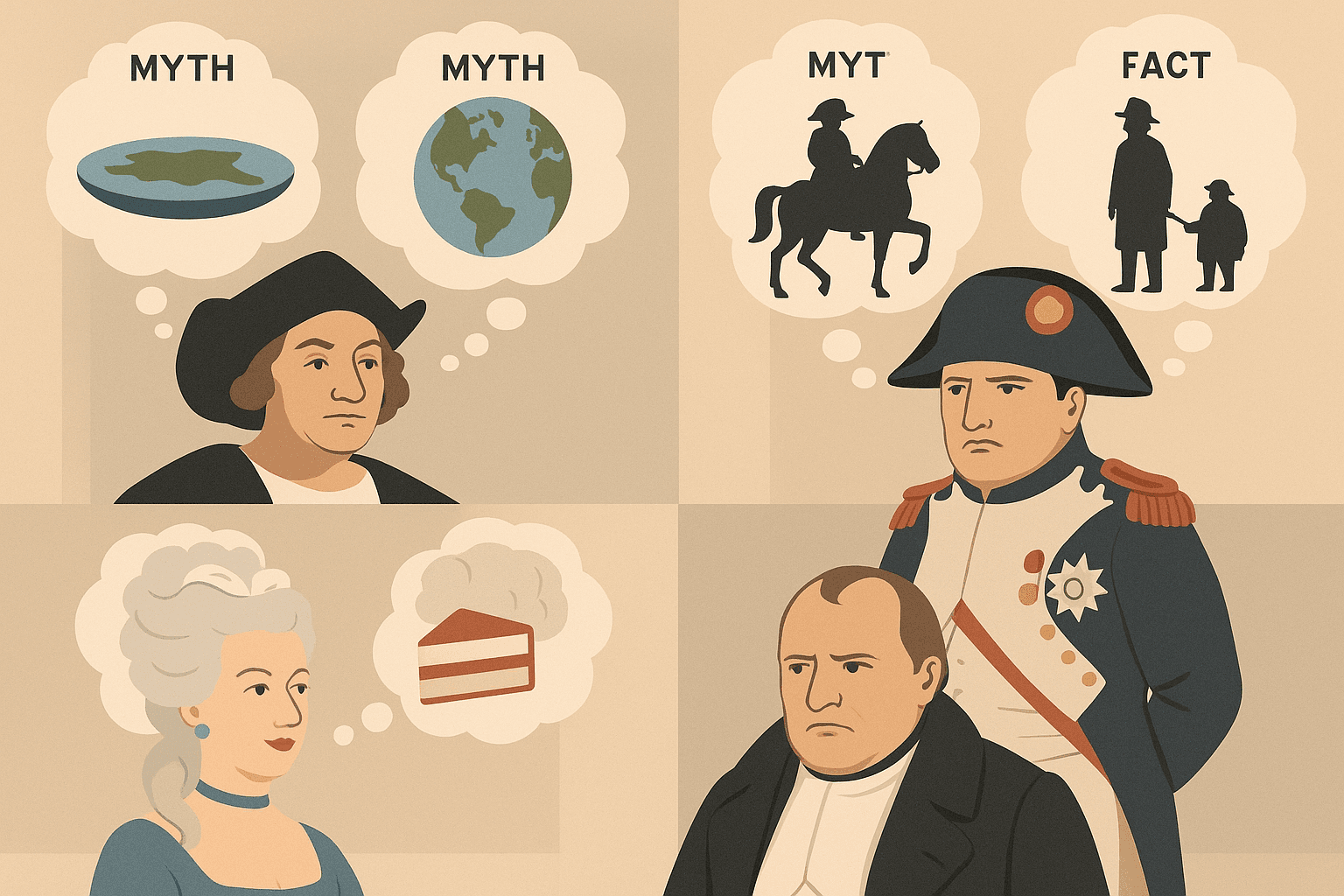
Debunking Historical Myths: Truths We Get Wrong
Some historical stories feel so familiar that we never question them. But what if the most repeated versions are not the most accurate?

Why Static Shocks Are Worse in Winter
Dry air holds less moisture, so static charge builds up more easily and discharges with a shock.
Read Next

The Science-Backed Secrets to Living 10+ Years Longer
Here's the surprising truth that decades of research have revealed: genetics account for only about 20-30% of how long you live. The rest? It comes down to your daily habits, social connections, and l...

The Hidden Cost of Small Choices: Decision Fatigue
Have you ever found yourself exhausted after a day filled with trivial decisions? Maybe you’ve spent thirty minutes trying to choose which series to binge-watch, or perhaps you’ve stood in front of...
Why Your Body Clock Controls More Than Sleep
Your body clock influences far more than bedtime. With better timing of light, meals, focus blocks, and recovery, you can improve energy and consistency without extreme routines.
Enjoyed this article?
Get more amazing facts delivered to your inbox