
Debunking Historical Myths: Truths We Get Wrong
Some historical stories feel so familiar that we never question them. But what if the most repeated versions are not the most accurate?
Have you ever repeated a historical fact with confidence, then discovered later it was shaky at best? It happens to all of us. Familiar stories feel true, especially when they are dramatic, simple, and emotionally satisfying.
Why Historical Myths Spread So Easily
Historical myths often survive because they are easier to remember than nuanced reality. A neat story with a hero and a villain is easier to pass along than a complex timeline full of uncertainty.
Add social media, short-form content, and repeated classroom summaries, and a simplified version can quickly become the dominant memory.
Famous Stories That Need a Second Look
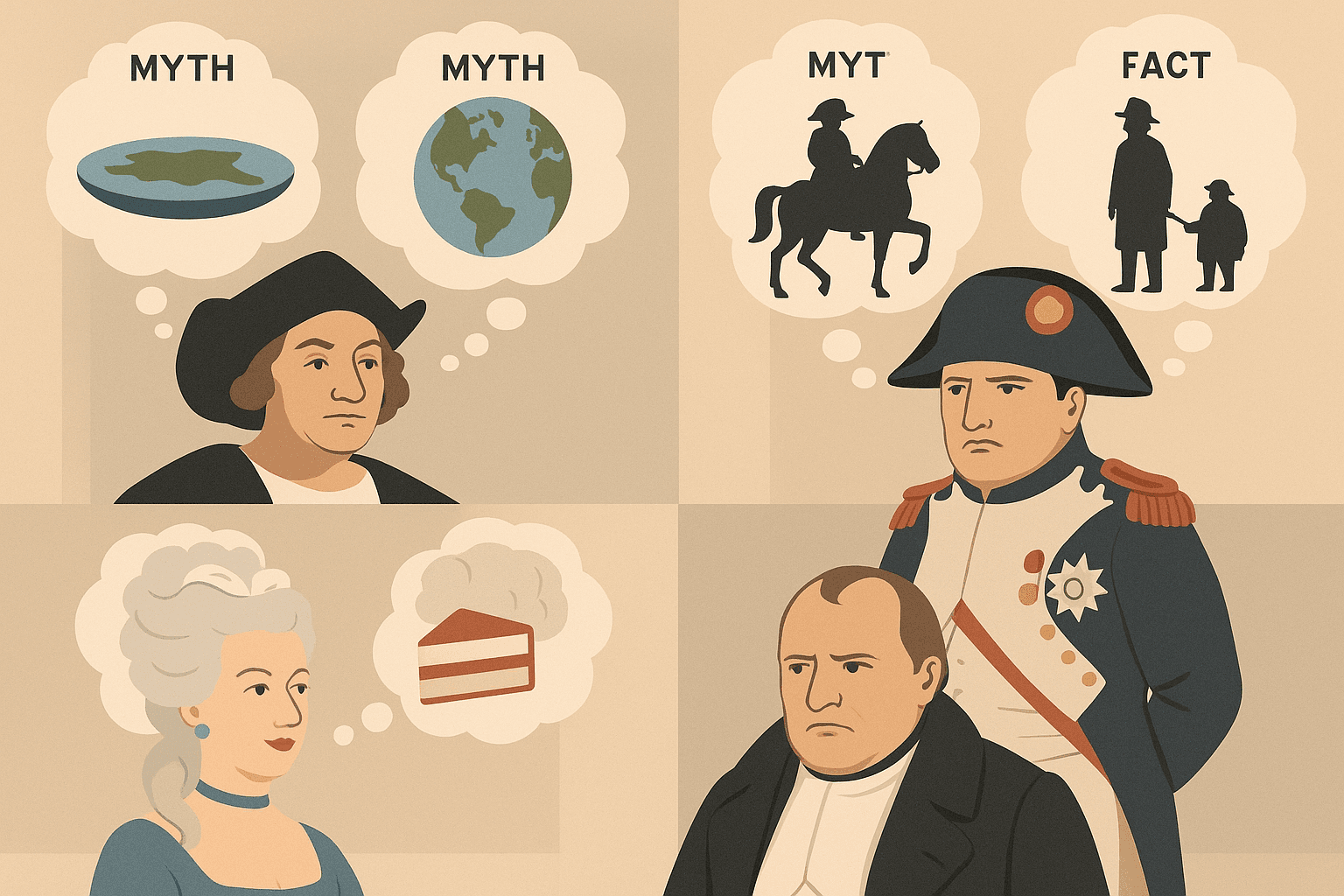
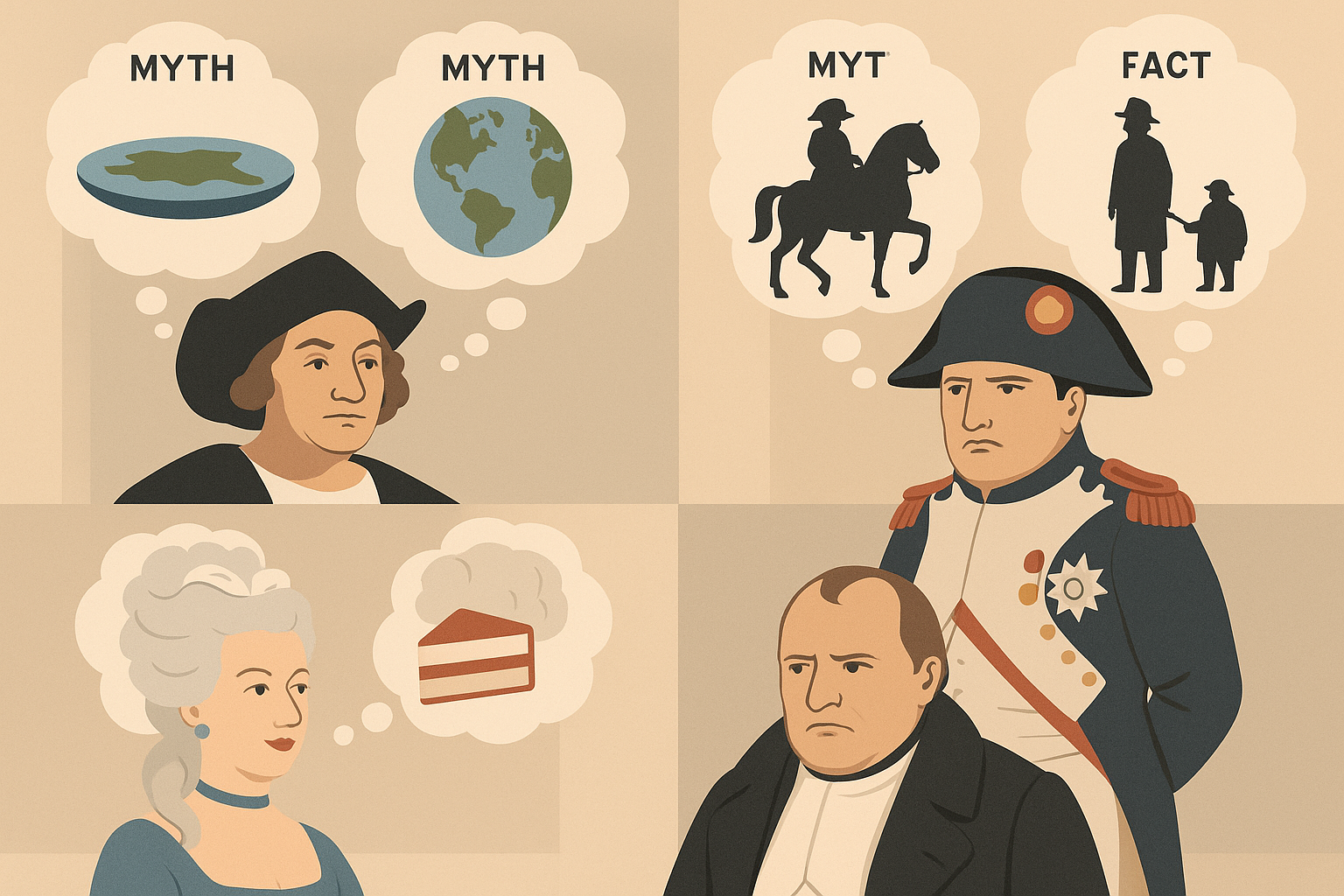
You might be surprised how many “common facts” are actually mixed with exaggeration. Napoleon’s height, Marie Antoinette’s famous quote, or simplified origin stories are classic examples. The goal is not to erase history, but to understand it more honestly.
When we revisit primary sources and context, the story usually becomes richer, not poorer.
Why We Keep Believing Them
Here’s the strange part: our brains prefer coherence over ambiguity. If a narrative fits what we [already](/post/how-artificial-intelligence-is-quietly-reshaping-your-daily-life) believe, we rarely challenge it. This is where confirmation bias and repetition effects play a major role.
A myth repeated enough times can feel emotionally “proven,” even when the evidence is thin.
Real-Life Example
A teacher assigns a class project about a “well-known” historical quote. Most students copy the same popular version. One student checks archival sources and finds the quote is likely apocryphal. The class discussion shifts from memorization to source criticism—and suddenly everyone sees history as investigation, not just storytelling.
Scientific Explanation
Cognitive science describes two useful mechanisms here: the illusion of truth effect (repeated statements feel truer) and confirmation bias (we accept information that supports what we already think). Together, they make historical myths resilient.
That does not mean people are irrational; it means the brain is efficient. The challenge is learning when to slow down and verify.
FAQ
What is a historical myth?
A historical myth is a widely repeated claim about the past that is false, distorted, or missing important context.
Are all simplified stories wrong?
Not always. Some simplifications are useful for teaching, but they become harmful when they replace evidence and nuance.
How can I verify a historical claim quickly?
Check reputable history sources, compare multiple references, and look for primary documents whenever possible.
Final Thoughts
Questioning myths is not about being cynical; it is about becoming more accurate. The more carefully we read the past, the better we understand the present. If a story feels too perfect, that is often your cue to dig one layer deeper.
🎯 Want More Mind-Blowing Facts?
Join 50,000+ curious minds getting weekly discoveries in their inbox
No spam. Unsubscribe anytime. 100% free.
Questions? info@curiospark.org
How did this article make you feel?
🔗 Related Facts You'll Love
Why Your Body Clock Controls More Than Sleep
Your body clock influences far more than bedtime. With better timing of light, meals, focus blocks, and recovery, you can improve energy and consistency without extreme routines.
10 Mind-Bending Scientific Facts That Challenge Everything You Think You Know
Science has a habit of revealing truths that seem impossible - facts so counterintuitive that they fundamentally challenge our understanding of reality. These aren't science fiction or theoretical spe...
Why Static Shocks Are Worse in Winter
Dry air holds less moisture, so static charge builds up more easily and discharges with a shock.
Honey Never Spoils—Archaeologists Found 3,000-Year-Old Honey
Ancient Egyptian tombs contained pots of honey that were still perfectly edible after thousands of years.
Did this blow your mind? Share it with someone who needs to know!
Our team of researchers, writers, and fact-checkers work together to bring you the most fascinating and accurate facts from science, psychology, and human behavior. We're passionate about making complex topics accessible and engaging for curious minds everywhere.
Frequently Asked Questions
A historical myth is a widely repeated claim about the past that is false, distorted, or missing important context.
Related Articles

Why Your Body Clock Controls More Than Sleep
Your body clock influences far more than bedtime. With better timing of light, meals, focus blocks, and recovery, you can improve energy and consistency without extreme routines.

10 Mind-Bending Scientific Facts That Challenge Everything You Think You Know
Science has a habit of revealing truths that seem impossible - facts so counterintuitive that they fundamentally challenge our understanding of reality. These aren't science fiction or theoretical spe...

Why Static Shocks Are Worse in Winter
Dry air holds less moisture, so static charge builds up more easily and discharges with a shock.
Read Next

The Science-Backed Secrets to Living 10+ Years Longer
Here's the surprising truth that decades of research have revealed: genetics account for only about 20-30% of how long you live. The rest? It comes down to your daily habits, social connections, and l...

The Hidden Cost of Small Choices: Decision Fatigue
Have you ever found yourself exhausted after a day filled with trivial decisions? Maybe you’ve spent thirty minutes trying to choose which series to binge-watch, or perhaps you’ve stood in front of...
Why Your Body Clock Controls More Than Sleep
Your body clock influences far more than bedtime. With better timing of light, meals, focus blocks, and recovery, you can improve energy and consistency without extreme routines.
Enjoyed this article?
Get more amazing facts delivered to your inbox