How Fast Charging Works: Watts, USB-C and Whether It Hurts Your Battery
Why does one charger fill your phone in 30 minutes while another takes hours? Learn how fast charging works, what watts and USB Power Delivery mean, and how to charge safely.
Information current as of November 2026 · How we research · Report an error
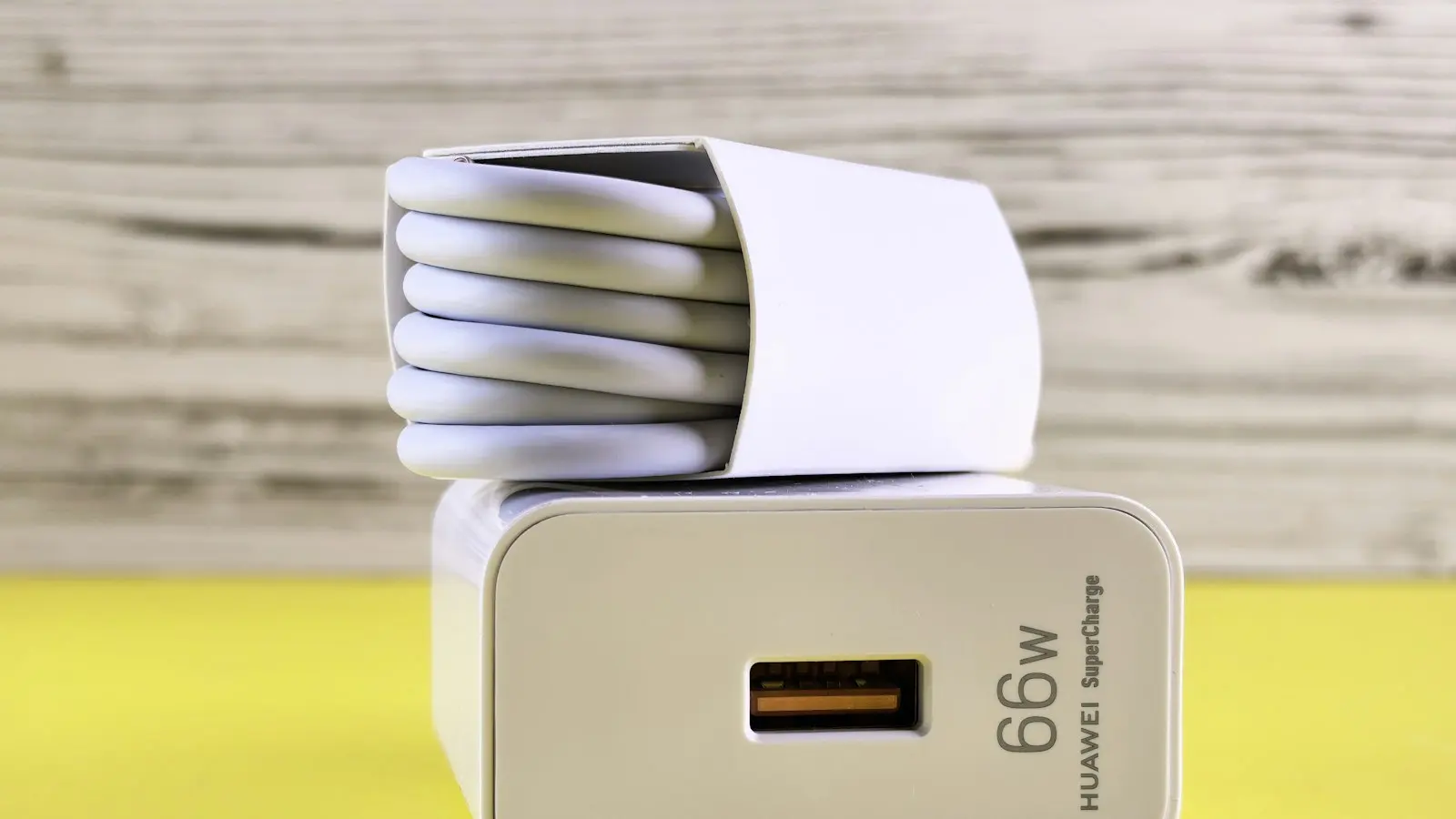
A few years ago, charging a phone took most of an evening. Today, many phones can go from nearly empty to half full in under half an hour. The difference comes down to how much power the charger delivers, and a clever conversation between the charger and the phone.
Power in one formula: watts = volts × amps
Electricity has two basic properties that matter here:
- Voltage (volts, V): the electrical “pressure” pushing the current.
- Current (amps, A): how much electricity flows.
Multiply them and you get power, measured in watts (W): how fast energy is delivered.
| Charger | Voltage × Current | Power |
|---|---|---|
| Old basic USB charger | 5 V × 1 A | 5 W |
| Common “fast” charger | 9 V × 2 A | 18 W |
| Modern phone charger | 9 V × 3 A | 27 W |
| Laptop USB-C charger | 20 V × 3.25 A | 65 W |
More watts means more energy per minute, and therefore faster charging, as long as the phone can accept it.
The charger and phone negotiate
A fast charger doesn’t simply blast power into your phone. When you plug in, the phone and charger communicate to agree on the safest, fastest level both support. Only then does the charger raise the voltage or current.
This negotiation follows charging standards:
- USB Power Delivery (USB PD): the main universal standard, used over USB-C by iPhones, Google Pixel, Samsung, laptops and many other devices. An extension called PPS (Programmable Power Supply) lets the voltage be adjusted in small steps, which some phones use for efficient fast charging.
- Proprietary standards: some manufacturers use their own systems for their fastest speeds. These usually require the brand’s own charger and cable; with a standard USB PD charger, the phone simply charges at a lower speed.
If the charger and phone don’t share a fast-charging standard, they fall back to a slower, basic level. Nothing is damaged; it’s just slower.
Why the last 20% is slow
Fast charging is fastest when the battery is low. As the battery fills, the phone deliberately slows down to protect it. Charging a nearly full lithium-ion battery at high power generates extra heat and stress, so most phones charge quickly to around 50–80%, then taper off. That’s why “0 to 50% in 30 minutes” is a common claim, but a full charge takes much longer.
How long will your phone take to charge? Enter your battery size and charger wattage to find out.
Free Charging Time Calculator →Does fast charging damage your battery?
Modern phones are designed for it. The biggest enemy of lithium-ion batteries is heat, and fast charging can generate more of it, so manufacturers manage it by monitoring battery temperature and adjusting speed.
Practical advice:
- Occasional and even daily fast charging is fine for a modern phone.
- If you don’t need speed, for example overnight, a slower charger or your phone’s optimized/adaptive charging setting is gentler.
- Avoid charging in hot places or under a pillow, and remove thick cases if the phone gets hot while charging.
The cable matters too
A USB-C cable isn’t just a USB-C cable.
- Most cables handle up to 60 W, which is plenty for any phone.
- Higher power, such as 100 W or more for laptops, requires cables with an electronic chip (an “e-marker”) that tells the charger they’re rated for it.
- Very cheap, uncertified cables may not support fast charging at all, or may be poorly made.
If your fast charger suddenly charges slowly, try a different cable first.
Can you use a more powerful charger than your phone needs?
Yes. A 65 W laptop charger won’t overload a phone that accepts 20 W. The phone only takes what it negotiates. This is one of the best things about USB-C and USB PD: one good charger can safely power your phone, tablet, headphones and laptop.
Wireless charging
Wireless chargers use magnetic induction: a coil in the charger creates a changing magnetic field that induces a current in a coil inside your phone. Standards like Qi and Qi2 make chargers work across brands.
Wireless charging is convenient but less efficient. Some energy is lost as heat, so it’s usually slower and makes the phone warmer than charging with a cable. Proper alignment helps, which is why magnetic designs like Qi2 snap the phone into the right position.
How to choose a charger
- Check your phone’s maximum supported charging speed in the manufacturer’s specifications.
- Buy a USB-C charger with USB PD (and PPS if your phone supports it) that meets or slightly exceeds that wattage.
- Choose reputable brands with safety certifications. Cheap counterfeit chargers can be a fire risk.
- Consider a multi-port charger if you charge several devices. Check how the total wattage is shared between ports.
Shopping tip · We may earn a commission
Looking for a compact fast charger? GaN chargers from brands like Anker, Ugreen and Baseus are small, run cooler and support USB Power Delivery. Check the wattage your phone actually supports before you buy.
See GaN USB-C chargers on AliExpress →The bottom line
Fast charging works by raising the voltage and current after the phone and charger agree on a safe level, usually through USB Power Delivery. It’s fastest when the battery is low and slows down as it fills to protect the battery. Use a good-quality USB-C charger and cable, keep your phone cool, and let it charge slowly when you’re not in a hurry.