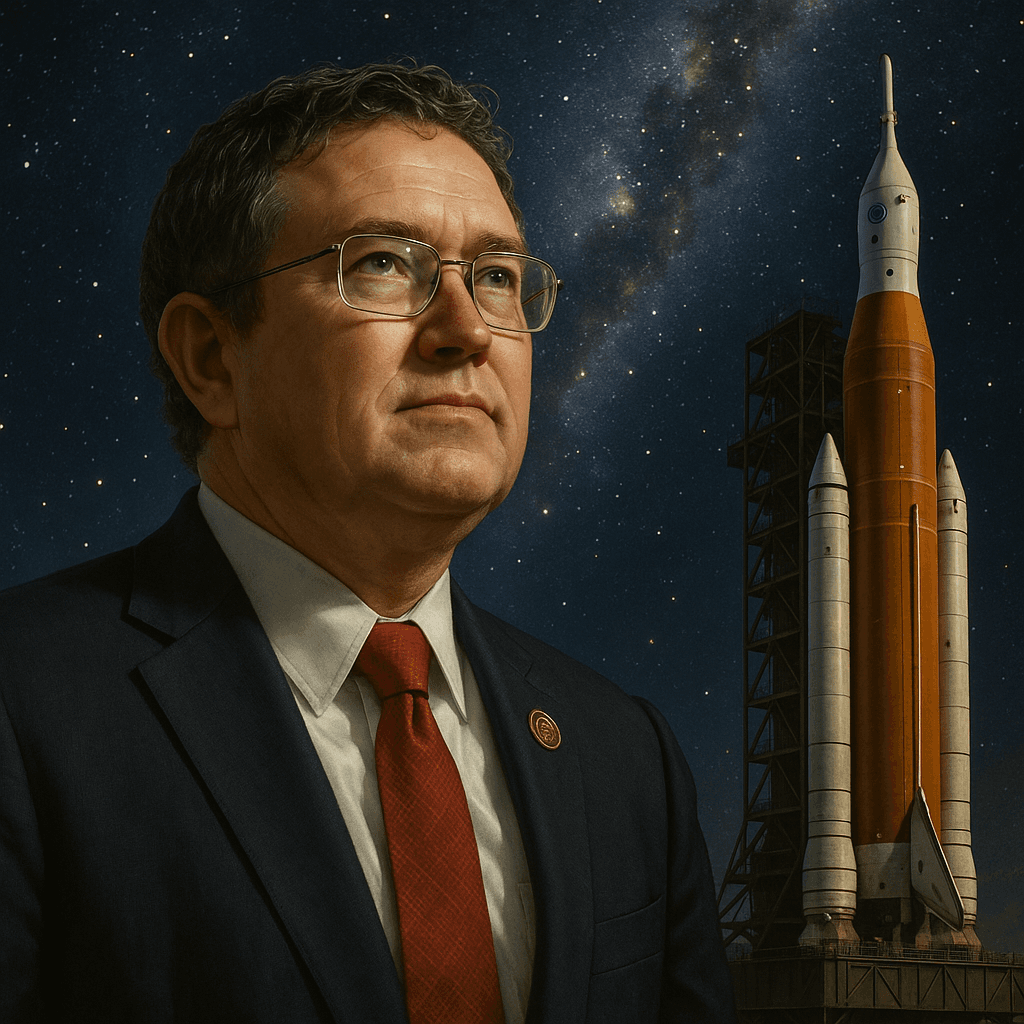

Thomas Massie: The Congressman with a Vision for Space Exploration
Discover how Thomas Massie is reshaping the conversation about space exploration in the United States and his ambitious plans for Mars by 2026.
Introduction
In an era where space exploration is becoming increasingly vital, one Congressman is making waves with his bold visions for the future. Thomas Massie, a Republican representative from Kentucky, is not only a staunch advocate for limited government but also a passionate supporter of the United States' ambitions in space. His commitment to advancing NASA’s goals and the exploration of Mars is gaining traction, making him a viral figure in the realm of space policy.
Who is Thomas Massie?
Elected to Congress in 2012, Thomas Massie is known for his libertarian leanings and strong beliefs in individual liberties and fiscal responsibility. However, what sets him apart is his fascination with technology and space. Massie, a proud graduate of MIT, holds a degree in electrical engineering and has never shied away from discussing the intersection of technology and government.
A Focus on Space Exploration
Massie has been vocal about his views on space exploration, advocating for increased funding for NASA and pushing for a more aggressive timeline toward Mars exploration. In recent interviews, he emphasized the importance of space for the future of humanity, stating that the next frontier is crucial not only for scientific advancement but also for national security and economic growth.
The Vision for 2026
One of Massie's most ambitious proposals is a plan to send humans to Mars by 2026. While this may seem overly optimistic to some, Massie believes that with the right investment and focus, the United States can lead the charge in interplanetary exploration. His vision includes:
- Increasing NASA's Budget: Massie argues that a robust budget is essential for meeting the ambitious goals set for Mars.
- Public-Private Partnerships: He advocates for collaboration between government agencies and private companies, which he believes could accelerate technological advancements in space travel.
- Education and STEM: Massie emphasizes the need for a strong educational framework in STEM (Science, Technology, Engineering, and Mathematics) to prepare future generations for careers in the space sector.
Building Support for Space Initiatives
Massie’s proposals have garnered attention beyond his home state. With the growing interest in space exploration across the political spectrum, he is working to build a coalition of supporters. By aligning space initiatives with economic growth and national pride, he aims to attract bipartisan support for NASA's funding and mission objectives.
The Role of NASA
As the primary agency responsible for the United States' civilian space program, NASA plays a crucial role in Massie's vision. Recent advancements, such as the Artemis program aimed at returning humans to the Moon, are paving the way for the preparation required for Mars missions. Massie is a strong advocate for maintaining this momentum.
Mars: The Next Step
The prospect of colonizing Mars has fascinated scientists and dreamers alike. Massie’s enthusiasm for this endeavor aligns with the growing interest in exploration beyond Earth. He believes that reaching Mars is not just about exploration but also about ensuring the survival of humanity. In his view, establishing a human presence on Mars could lead to:
- Resource Utilization: Mars has resources that could be harnessed for human use, potentially alleviating some of Earth's resource challenges.
- Scientific Discovery: The Martian environment offers unique opportunities for scientific research that could advance our understanding of life beyond Earth.
- Technological Innovation: The challenges of interplanetary travel could lead to breakthroughs in technology that benefit life on Earth.
Challenges Ahead
While Massie's vision is ambitious, it is not without challenges. Funding, technological hurdles, and public interest are significant factors that will influence the feasibility of his goals. Critics argue that the timeline is too aggressive, and significant work remains to be done before sending humans to Mars.
Overcoming Skepticism
To address skepticism, Massie is focused on transparency and education. By engaging with the public and emphasizing the potential benefits of space exploration, he hopes to create a groundswell of support. His ability to communicate complex ideas in relatable terms has made him a popular figure in discussions about the future of space exploration.
A Viral Sensation
Massie's passion for space has turned him into a viral sensation, especially among young people interested in STEM. His social media presence and public speeches often highlight the excitement and possibilities that come with space exploration, inspiring a new generation to consider careers in this field.
The Future of Space Policy
As the world looks toward the stars, Thomas Massie's influence on space policy is likely to grow. His advocacy for Mars exploration aligns with a broader trend of increased interest in space across the United States. With NASA's ongoing projects and the rise of private space companies, the coming years could be transformative for space exploration.
Why This Matters
Space policy affects research funding, technology development, and long term national priorities. Understanding the policy conversation helps readers see how missions are decided.
Conclusion
Thomas Massie embodies the intersection of politics, technology, and the quest for knowledge. His vision for sending humans to Mars by 2026, while ambitious, highlights the critical role that government can play in fostering innovation and exploration. As we navigate the complexities of space policy, Massie's perspectives remind us of the importance of dreaming big and investing in our future among the stars.
FAQs
What is Thomas Massie's main focus in Congress?
Thomas Massie focuses on limited government, individual liberties, and advancing space exploration initiatives, particularly with NASA.
Why does Massie want to send humans to Mars by 2026?
He believes that with proper funding and public-private partnerships, it is crucial for the United States to lead in interplanetary exploration.
How does Massie propose to increase support for NASA?
Massie suggests increasing NASA's budget, fostering public-private partnerships, and promoting STEM education to build a workforce for the future.
What are the potential benefits of colonizing Mars?
Benefits include resource utilization, scientific discovery, and technological innovations that could also benefit life on Earth.
How has Massie's advocacy affected public opinion on space exploration?
His engaging communication style and focus on the excitement of space exploration have garnered attention, especially among young people.
What challenges does Massie face in his vision for space?
Challenges include funding, technological hurdles, and public skepticism about the feasibility of rapid Mars missions.
How can the public get involved in space initiatives?
The public can support space initiatives by advocating for increased funding, participating in educational programs, and following developments in space exploration.
Did You Know?
Thomas Massie has a background in electrical engineering and is a strong advocate for the intersection of technology and government.
Surprising Fact
Despite his focus on space, Massie is also known for his libertarian views, emphasizing limited government involvement in everyday life.
Shareable Quote
"The next frontier is not just about exploration; it’s about ensuring the survival of humanity and unlocking the universe’s mysteries."
Poll Question
Do you support sending humans to Mars by 2026?
Sources
- Artemis - NASA
- Moon to Mars - NASA
🎯 Want More Mind-Blowing Facts?
Join 50,000+ curious minds getting weekly discoveries in their inbox
No spam. Unsubscribe anytime. 100% free.
Questions? info@curiospark.org
How did this article make you feel?
📚Sources & Further Reading
- •Artemis— NASA
- •Moon to Mars— NASA
All facts on CurioSpark are verified by our editorial team using peer-reviewed research and authoritative sources. Learn about our fact-checking process
🔗 Related Facts You'll Love
Why Gravity Creates Surprisingly Complex Orbits
Some topics look small at first, but they quietly reshape how we think and act. simple gravity equations generate complex trajectories. Instead of chasing quick hacks, this article focuses on what ...
Why Gravity Creates Surprisingly Complex Orbits
Some topics look small at first, but they quietly reshape how we think and act. simple gravity equations generate complex trajectories. Instead of chasing quick hacks, this article focuses on what ...
Why NASA Launches from Florida (And Not the Middle of the US)
Florida offers a speed boost from Earth rotation, safe launch corridors over the океан, and decades of specialized infrastructure.
Why the International Space Station Flies Over Your City So Often
The ISS orbits Earth every 90 minutes on a fixed path, so its ground track shifts and crosses many cities every few days.
Did this blow your mind? Share it with someone who needs to know!
Our team of researchers, writers, and fact-checkers work together to bring you the most fascinating and accurate facts from science, psychology, and human behavior. We're passionate about making complex topics accessible and engaging for curious minds everywhere.
Related Articles

Why Gravity Creates Surprisingly Complex Orbits
Some topics look small at first, but they quietly reshape how we think and act. simple gravity equations generate complex trajectories. Instead of chasing quick hacks, this article focuses on what ...
Why Gravity Creates Surprisingly Complex Orbits
Some topics look small at first, but they quietly reshape how we think and act. simple gravity equations generate complex trajectories. Instead of chasing quick hacks, this article focuses on what ...

Why NASA Launches from Florida (And Not the Middle of the US)
Florida offers a speed boost from Earth rotation, safe launch corridors over the океан, and decades of specialized infrastructure.
Read Next

The Placebo Effect Works Even When You Know It's a Placebo
Recent studies show that placebos can work even when people know they're taking a sugar pill.

Why Your Phone Battery Feels Faster After an Update
Updates can trigger background tasks, indexing, and calibration. The battery drain is often temporary, not a permanent loss.
Why NASA Launches from Florida (And Not the Middle of the US)
Florida offers a speed boost from Earth rotation, safe launch corridors over the океан, and decades of specialized infrastructure.
Enjoyed this fact?
Get more amazing facts delivered to your inbox